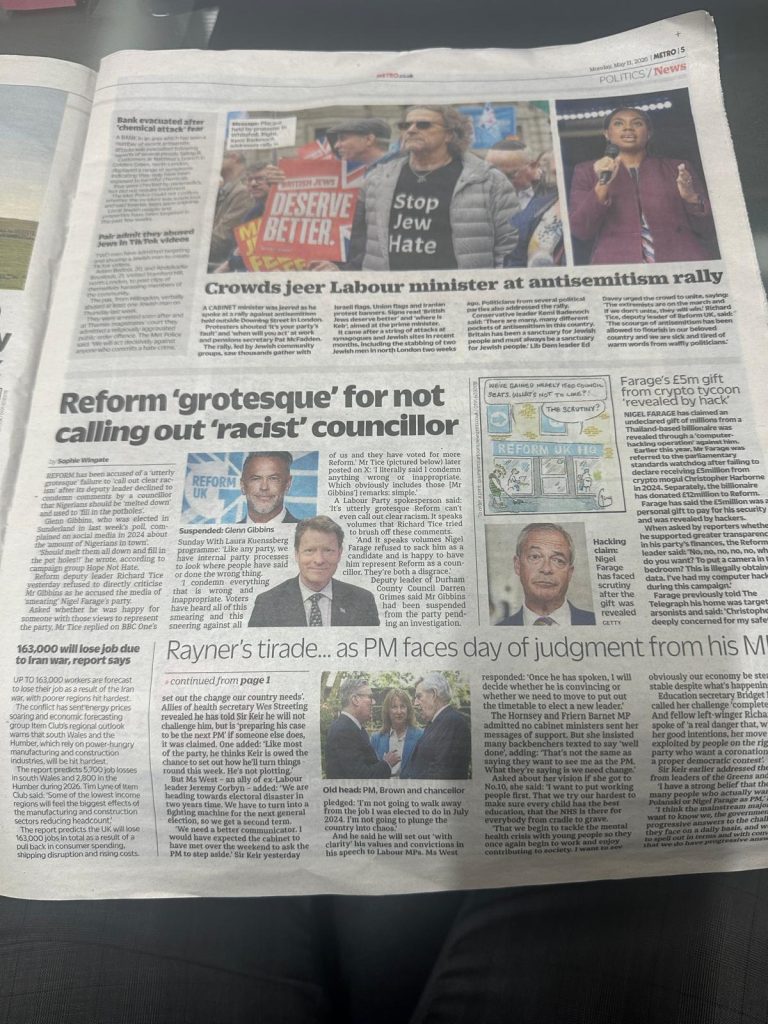
The recent controversy surrounding Reform UK Councillor Glenn Gibbons over alleged racist remarks has once again exposed the harsh realities many immigrants and minorities face in foreign countries, particularly in parts of Europe where anti-immigration sentiments continue to rise.
The political backlash followed accusations that the Councillor made comments widely interpreted as offensive and discriminatory. Although supporters of the Councillor argued that his remarks were misunderstood or taken out of context, critics insisted that public office holders must speak responsibly and avoid statements capable of promoting division or hostility against minority communities.
The development has sparked wider conversations not only in the United Kingdom but also among Africans abroad, many of whom continue to struggle with discrimination, unequal treatment, and subtle forms of exclusion despite contributing meaningfully to the economies of their host countries.
For many Nigerians seeking greener pastures overseas, stories of racism, social rejection, and anti-immigrant hostility are becoming increasingly common. While many still travel abroad in search of better opportunities, safety, quality education, and stable economic systems, incidents like these continue to remind migrants that in some societies they may never be fully accepted regardless of their qualifications, hard work, or contributions.
Political analysts say the controversy highlights a growing wave of nationalist and anti-immigration politics spreading across parts of Europe and North America. Immigrants, particularly Africans, are often used as political talking points during elections, with some politicians blaming foreigners for economic hardship, unemployment, or pressure on social services.
Beyond the politics, however, the incident has also reignited important conversations back home in Nigeria about governance, economic development, and the urgent need to create a country where citizens can thrive without feeling compelled to leave.
Many Nigerians believe that if the nation offered stable electricity, affordable living conditions, quality healthcare, reliable security, functional education, job opportunities, and a fair economic environment, fewer citizens would risk dangerous migration journeys or endure humiliation abroad in search of survival.
The situation serves as a strong reminder to the Nigerian government at all levels that the best way to reduce desperate migration is not through speeches alone but through deliberate people-oriented policies capable of restoring hope and dignity within the country.
There is growing public opinion that Nigeria possesses enough human and natural resources to become a place where citizens can comfortably build successful lives without constantly looking outward for survival. From agriculture to technology, manufacturing, maritime business, entertainment, and entrepreneurship, many sectors remain underdeveloped despite their enormous potential to create jobs and wealth.
Citizens have therefore called on government authorities to prioritize policies that improve living standards, strengthen local industries, support small businesses, tackle inflation, and create opportunities for young people. According to many observers, when citizens feel protected, valued, and economically empowered in their homeland, the pressure to migrate naturally reduces.
While migration itself is not a crime and global exposure remains important, many Nigerians insist that no citizen should be forced by hardship to seek refuge in environments where they may be treated as second-class humans.
The Reform UK controversy, therefore, goes beyond British politics. To many Africans, it stands as another wake-up call for African governments, especially Nigeria, to build nations where dignity, opportunity, and hope are available at home rather than searched for abroad at painful emotional and social costs.