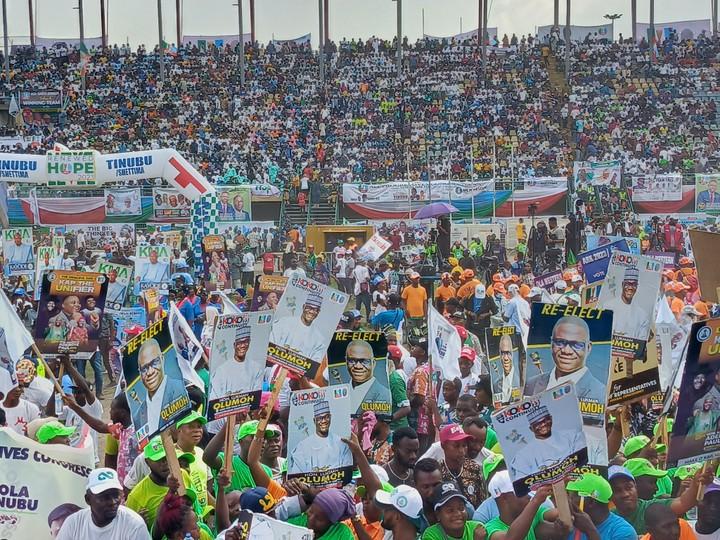
Political activities are gathering momentum across the country, particularly at the grassroots, following the official commencement of campaigns for the 2027 governorship and State Houses of Assembly elections.
The Independent National Electoral Commission (INEC) timetable provides that campaigns for the two categories of elections commenced on Tuesday, September 8, marking the beginning of more intensive voter mobilisation and political engagement ahead of the polls.
The commencement is in line with the timetable released by INEC, which had earlier fixed August 19 for the commencement of campaigns for presidential and National Assembly candidates.
The 2027 governorship elections are expected to be conducted in 28 states whose electoral cycles coincide with the general election timetable.
Eight states ; Imo, Ondo, Osun, Bayelsa, Edo, Kogi, Ekiti and Anambra are, however, not scheduled to hold governorship elections in 2027, as their electoral cycles fall outside the general election timetable.
With the campaign period now open, political parties and candidates are expected to intensify grassroots mobilisation, unveil campaign programmes and expand engagements with voters across the states where governorship and State Assembly elections will be held.
Grassroots Activities Gather Momentum
In Lagos West Senatorial District, political activities are already becoming more visible, with senatorial candidates and their supporters moving from one local government area to another in a series of meetings, empowerment programmes and other forms of political engagement.
At some of these gatherings, modest cash and material assistance have been distributed to beneficiaries under various empowerment initiatives, activities that have increasingly become part of the political mobilisation landscape ahead of the elections.
Campaign committees are also beginning to emerge, while canvassers, polling-unit coordinators, agents and other election-related personnel are being identified and constituted by political camps as parties strengthen their structures ahead of the polls.
The growing grassroots activities indicate that the political contest is gradually moving beyond party offices and formal meetings to direct engagement with communities and voters.
Major political parties, including the All Progressives Congress (APC), Peoples Democratic Party (PDP), Nigeria Democratic Congress (NDC) and African Democratic Congress (ADC), have already produced candidates in several states, setting the stage for what is expected to be a keen political contest.
However, the formal opening of the campaign period comes amid continuing efforts by several parties to establish and consolidate their campaign structures at the national, state and grassroots levels.
The APC recently announced its National Campaign Council but has yet to formally inaugurate the body. Reports have attributed the delay to concerns over the composition of the council, although the party has not publicly confirmed all the details surrounding the reported disagreements.
Opposition parties, including the NDC, ADC and PDP, are similarly working to consolidate their campaign structures as they prepare for the 2027 elections.
Political observers have attributed some of the organisational challenges to post-primary disagreements in certain areas, while funding constraints remain a major consideration in others. Emerging political alliances, defections and continuing negotiations among political actors are also expected to influence the pace at which parties establish their campaign machinery.
INEC Timetable
Meanwhile, INEC is preparing to publish the final list of candidates for the presidential and National Assembly elections scheduled for January 16, 2027.
The commission is expected to release the final list on September 12, in accordance with its published electoral timetable.
The APC, PDP, NDC and ADC are among the major political parties expected to field candidates across the 469 National Assembly constituencies, comprising 109 Senate seats and 360 seats in the House of Representatives.
The deadline for the substitution of presidential and National Assembly candidates expired on August 22, while the submission of nomination forms closed on August 29.
With the political parties now moving into full campaign mode, attention is expected to increasingly focus on issues, candidate credibility, grassroots organisation, voter mobilisation and the capacity of the various parties to translate their political structures into actual electoral support.
The coming months are therefore likely to witness heightened political activity as parties seek to consolidate their support bases, win over undecided voters and position their candidates for the 2027 elections.