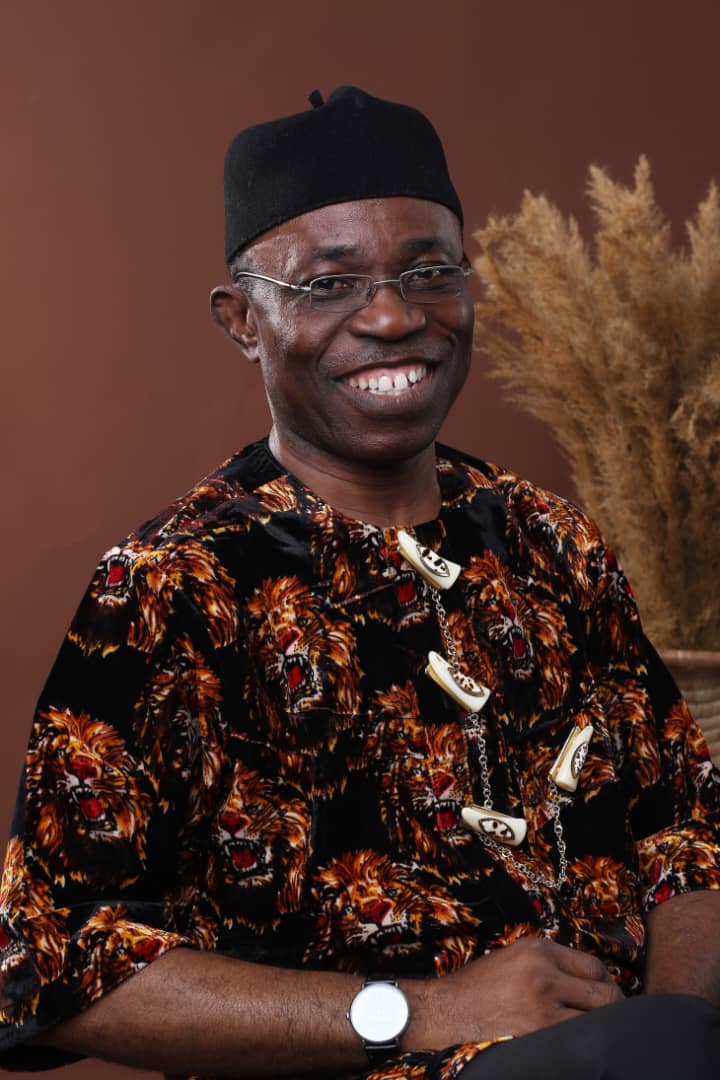
Okechukwu Polycarp Ogunjiofor aka Paulo, is the producer of the 1992 blockbuster movie, “Living in Bondage”. In 2021, he produced another epic blockbuster movie “Amina” which won the AMVCA, for the overall movie category. He speaks more about the movie ‘Amina’ in this exclusive interview with SAMUEL ORJI
Your movie ‘Amina’ won the 2022 AMVCA for best overall movie category. What was the motive behind producing the movie?
As you may know, the primary reasons for every creative enterprise are entertainment and profit. Still, apart from these, there are two other reasons for embarking on Amina film: deepening the Nollywood phenomena and documenting our indigenous stories for the global audience.
You see, after our pioneering efforts in Nollywood with “Living in Bondage”, “Circle Of Doom”, “Nneka the Pretty Serpent “, Brotherhood of Darkness, and other hits, the whole world took notice of our industry. So, I felt that there was more we could do to deepen the acceptance of the phenomenon called Nollywood. I felt it was time for us to deploy cutting-edge digital film technology to showcase a locally-themed, globally relevant story that could hold its own with the competition globally.
Secondly, I felt that we could start telling our indigenous stories to the world not only to entertain Nollywood’s growing global audience but to research and document the lives and times of our heroes and heroine’s past properly, to re-write the negative narratives against Africa in the global arena. In addition, it also creates the impetus upon which Africa’s growing young population could stand and aspire for higher ideals.
So, for me, in keeping with our vision which is to constantly chart a new course for others to follow, especially regarding the movement towards the investors’ market that beckons, we needed to show the “how” or what is possible so that producers and investors can have a template upon which to base their calculations and decisions in their future film projects. Amina, which is a celebration of our historical heroine, is a cut above anything that has come out of Nigeria since the inception of Nollywood. We hoped that this film would once again change the landscape of film in Africa like Living in Bondage did in 1992 and then usher Nollywood into her final frontier which I call “the investors’ market”.
Indeed that vision came to pass when Amina apart from receiving 14 nominations and winning awards including the most prestigious AMVCA Best Overall Movie 2022, became the first film from Nollywood ever to hit the global top 10 on Netflix in over 190 Countries around the globe.
What was the support like from the northerners where the movie emanated from?
Ironically, we didn’t get any form of support from individuals, states, or institutions in the North except the cast and crew we hired to get this job done. But we knew this was going to happen, which was why we decided to make the film in the English language with subtitles because we felt that making the film in Hausa indigenous language (as much as it would have been the best) would be injurious to our business plan for obvious reasons.
Don’t forget that the North is almost like a closed society when it comes to information sharing with outsiders and as such, we had a very hard time getting the authentic story during research even though we had approval letters from the Presidency of the Federal Republic of Nigeria for this purpose. So, we feared that the Amina film would be dead on arrival if we did the film in the Hausa language and the film failed to get their adoption. Truth be told, that decision saved us because the moment Amina was released to global acclaim on Netflix, the North remains the only group that criticized it simply because it wasn’t done by one of them.
Why did you choose an epic movie from the northern part of the country which is far from your original background as an Igbo man?
For me, I am a thoroughbred Nigerian of Igbo extraction. I grew up in the South East, schooled in the North, lived in the South West, and married from the South-South. Following this order, I have made Living in Bondage, Circle of Doom, Nneka the Pretty Serpent (films in Igbo culture), made “Amina” for the Northern culture, and planning to make films for the Southwest and the South-South very soon.
But above all these, filmmaking is a calling for me. It is a ministry and like every ministry, the motive is to build the people and the society towards self-realization for the common good. In order words, a ministry should have the ingredients that enlighten the people, and unite them in a bond of love that could foster individual efforts towards a shared purpose for the collective well-being and progress of all as opposed to division, competition, and unhealthy rivalry.
So to that extent, my motive for Amina was a deliberate move to bridge the gap between the southern Nollywood film industry and the Northern Kannywood film industry. As we all know, there has been a dichotomy between the North and the South of Nigeria in the creative space. While the Northern filmmakers call themselves (Kannywood), the Southern filmmakers refer to themselves as Nollywood.
What this dichotomy means is that film products from either divide could hardly penetrate the other side. And so, we needed someone to build a bridge, a unifying bridge across that divide that would bring Nollywood and Kannywood together to learn from each other when they collaborate on a common project that tells one single story that subsequently lifts the Nigerian film industry to the global arena, so that the whole world will see, and the northern people and the southern people will as well see that together we can be unconquerable when we eschew perceived differences and prejudices to work together.
So, my choice to do Amina – a Northern story was deliberate. Nollywood as a brand is going through defining moments once again and I always try to find new ways to do the old things. It gives me great joy when I attempt the things that appear so difficult so that others can have something to fall back on when we finally crack the “whys” and “hows” of doing those difficult things. So in essence, we just decided to create a partnership that would network the North and the South together so that the market can get bigger. What we have now is just a small Nollywood and a small Kannywood that could be bigger when we begin to collaborate to tell cross-cultural stories thereby expanding the creative industry ecosystem for the benefit and progress of all.
Other blockbuster movies like Rattle Snake and Issakaba etc, have a remake. Is there any plan to do a remake of Living in Bondage?
You are not correct. Living in Bondage and Nneka the Pretty Serpent films have equally enjoyed remakes since 2019. Living in Bondage remake (Breaking Free) was produced by Play Network Studios, Executive Produced by Charles Okpaleke, written by Nicole Asinugo & C.J. ‘Fiery’ Obasi and Directed by Ramsey Nouah. Nneka was remade in 2020, while Brotherhood of Darkness will follow soon.
.The name Paulo stuck after the movie, “Living in Bondage”. Why did you pick that name, has it opened doors for you?
Well, I picked that name because it is the short form of my English name – Polycarp. Don’t forget that was our first film and we didn’t really know better then, so I couldn’t separate the role I was playing from myself. And yes, that name has opened doors for me and closed some as well in certain quarters.
Are you surprised at the low reception the movie Amina received especially from the northern part of the country?
Not really! As I said earlier, the North is like a closed society when it comes to information sharing with outsiders. Their penchant for hedging outsider intrusion in matters they consider their own especially history is legendary. What we went through during the 19 years of research prepared us for the shocks we saw during Amina production and the subsequent global release. Their anger and criticism of the film’s success were not borne out of misrepresentation of facts of history but simply an aversion to the outsiders behind the film project.
You stopped acting after Living in Bondage and just a few other movies. Why did you stop acting and producing as well?
Yes, I stopped acting but I never stopped producing. After Living in Bondage, I have produced lots of television soap opera series, feature films, and corporate documentary productions such as Circle of Doom, Nneka the Pretty Serpent, Brotherhood of Darkness, When flowers turn black, Rough Edges – soap opera series, Cyberia – soap opera series, Hope avenue – sitcom series, First City Monument Bank- five-part documentary series, etc.
I also produced and directed The Chattered Institute of Bankers of Nigeria (CIBN) 50th Anniversary Documentary (2013). I was also the Director of, Global Live Broadcast of the World Economic Forum (WEF) in Africa, Abuja (2014), and presently the Producer/Executive Producer of “Amina” feature film project that spanned 25years in research and production, currently a Netflix Original film. I am also a published author of eight (8) books in online bookstores.
As a producer, people produce movies and show them in the cinemas and the next thing you hear is that the movie has grossed ₦500,000,000 in the cinemas. Is this possible in Nigeria, or this is just a media gimmick to scale up the value of that movie?
Although I do not have much information on this question to say categorically what is going on behind the scenes, I do not see why anyone would want to falsify box office figures. However, when you look at the number of cinema screens available nationwide, one is tempted to cry foul, but hey, who would be foolish enough to cook up books and figures when you have the taxman next door?