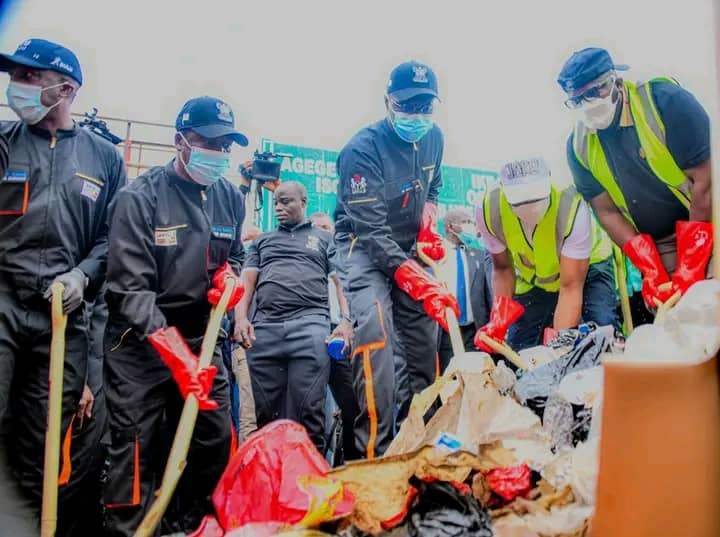
The war against filth in Lagos State is as old as the city itself. From the era of military administrations to successive civilian governments, efforts have been made to instill a culture of environmental cleanliness. Weekly sanitation exercises, public awareness campaigns, and stricter environmental laws have all been introduced at different times. Yet, despite these repeated interventions, Lagos continues to struggle with waste management, raising a fundamental question: why is the state still losing this battle?
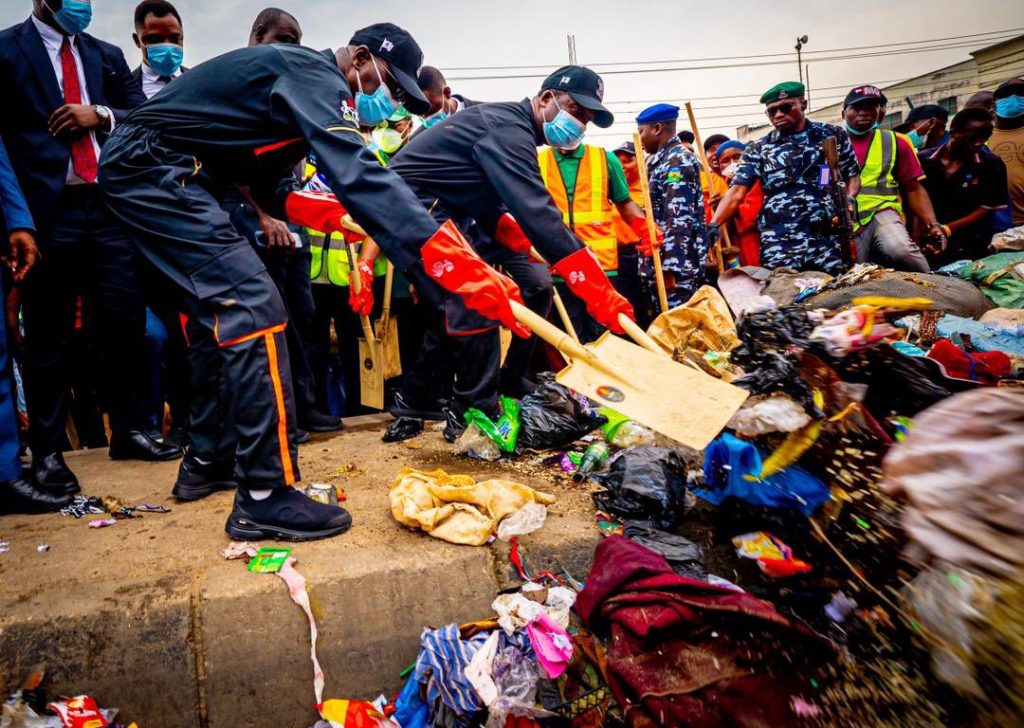
At the heart of the problem lies a disconnect between policy formulation and actual implementation. While the government, through the Lagos Waste Management Authority (LAWMA), has designed frameworks intended to modernize waste collection, the reality on the ground tells a different story. The Private Sector Participation (PSP) model, which was introduced to improve efficiency by involving private operators, has instead become one of the weakest links in the sanitation chain.
A major factor undermining the system is the operational failure of many PSP operators. Rather than functioning as professional service providers, a significant number appear to be driven more by political connections than competence. In many communities, residents have reported that when they challenge poor service delivery such as irregular or nonexistent waste collection, PSP workers respond with open defiance. Some even boast of political backing, suggesting that complaints or petitions would lead nowhere because their principals are influential figures within the state.
This politicization of waste management has created a culture of impunity. Accountability is weakened, and performance standards are rarely enforced. Instead of prioritizing efficient waste evacuation, some operators focus more on revenue collection, ensuring that households continue to pay service charges regardless of whether the service is actually rendered. This not only undermines the credibility of the system but also erodes public trust.
Closely tied to this is the elitist and often coercive manner of enforcement. Residents are frequently compelled to comply with sanitation laws without any guarantee that services will be provided by the PSP Operators. Authorities tend to criminalize non-compliance such as failure to pay PSP fees or improper waste disposal without examining the underlying causes. Yet, it is worth asking: would any normal residents resort to dumping refuse on roadsides or patronizing informal cart pushers if waste collection services were reliable and consistent?
The answer is evident in the lived experiences of many Lagosians. In several neighborhoods, PSP operators fail to collect waste for weeks or even months. In some cases, they arrive at times when most residents have already left for work, making it impossible to access household waste bins. Despite these lapses, households are still billed for services not rendered. When residents refuse to pay under such circumstances, they are labeled defaulters, creating a cycle of frustration, resistance, and further non-compliance.
Compounding the problem is the lack of adequate operational capacity among many PSP operators. A number of them reportedly do not meet the basic requirements for registration, particularly the ownership of waste disposal vehicles. Instead, they rely on rented or hired trucks, which leads to inconsistent service and frequent delays. Some operators have even admitted that the high cost of acquiring trucks often estimated at over ₦20 million, makes it difficult for them to invest in proper infrastructure. As a result, what exists in many cases is a system that is structurally incapable of delivering efficient service.
Beyond the failures of PSP operators, there is also a broader issue of systemic inconsistency in enforcement and public engagement. Environmental sanitation exercises, such as the monthly restrictions on movement, have gradually lost their effectiveness. What was once a serious civic exercise has, over time, become more symbolic than impactful. Compliance is often selective, and enforcement can appear arbitrary, further weakening its intended purpose.
Public attitude toward sanitation is another factor that cannot be ignored. In a densely populated and fast-growing city like Lagos, waste generation is inevitably high. However, the culture of proper waste disposal has not kept pace with this growth. Many residents still lack adequate awareness or motivation to adopt responsible practices, especially when they perceive the system as unfair or ineffective. When people feel they are paying for services they do not receive, their willingness to cooperate diminishes significantly.
Infrastructure challenges also play a critical role. Lagos, with its expanding population and urban sprawl, requires a highly efficient and well-coordinated waste management system. Yet, inadequate landfill capacity, traffic congestion, and poor urban planning continue to hinder effective waste evacuation. Even when PSP operators make efforts to collect waste, delays in accessing disposal sites can disrupt the entire process.
Ultimately, the persistence of filth in Lagos is not the result of a single failure but a combination of interconnected issues: weak institutional enforcement, politicization of service delivery, inadequate infrastructure, and low public trust. The current system places a disproportionate emphasis on compliance without ensuring that the necessary services are consistently delivered.
For Lagos to win the war against filth, a fundamental shift is required. First, there must be a strict separation between political influence and waste management operations. PSP operators should be selected and retained based on competence, capacity, and performance,not connections. Regular audits and transparent monitoring systems must be introduced to ensure accountability.
Second, enforcement strategies need to become more balanced and humane. Rather than relying solely on punitive measures, authorities should focus on addressing the root causes of non-compliance. This includes ensuring reliable service delivery, improving communication with residents, and rebuilding public trust.
Third, investment in infrastructure is essential. From modern waste collection vehicles to improved landfill management and recycling systems, Lagos must upgrade its waste management ecosystem to match its status as a megacity.
Finally, public reorientation campaigns must be sustained and made more effective. Sanitation should not be seen as a forced obligation but as a shared responsibility between the government and the people.
Until these structural and cultural issues are addressed, the war against filth in Lagos will remain more of a slogan than a reality. The city’s ambition to be a model megacity cannot be achieved in an environment where waste management systems are inconsistent, politicized, and inefficient. The time has come not just for renewed efforts but for a complete rethink of strategy, one that prioritizes accountability, professionalism, and genuine service delivery.