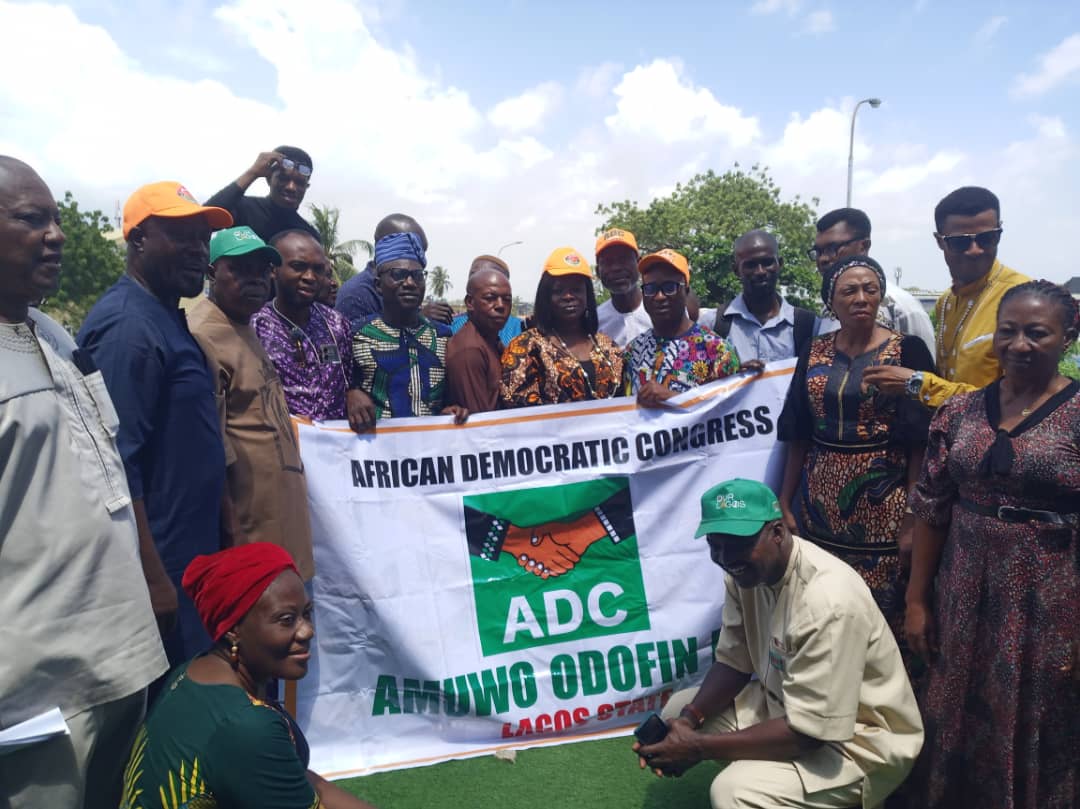
What Badagry Division brings to the table at this defining moment is the rare advantage of having a national leader whose political judgement has proven consistently fair, balanced, and rooted in equity. Asiwaju Bola Ahmed Tinubu is not just a political strategist; he is a statesman with an instinctive understanding that what is good for the political goose must equally be good for the political gander. He has shown, time and again, that he recognizes the right moment to correct historical imbalances and advance justice within the political structure.
The same sense of timing and fairness that produced his historic and timely “Emi l’okan” declaration is equally relevant today. In the same manner he asserted his legitimate turn based on long-standing contributions, equity, and political order, Asiwaju understands that Badagry Division l’okan. And for this turn, the division is not coming empty-handed; it is blessed with innumerable sons and daughters whose profiles, integrity, and competence are unmistakably befitting of the governorship seat.
For decades, Lagos has prided itself on political maturity,on producing leaders who are deliberate, thoughtful, and committed to maintaining the delicate balance required in a state as dynamic and diverse as ours. President Tinubu, the chief architect of the modern Lagos political ecosystem, has always grounded his decisions not in sentiment, but in fairness, justice, and a deep appreciation for political stability.
Since the state’s creation in 1967, the informal rotation of leadership across its major divisions has been clear, even if never formally codified. Ikeja, Ikorodu, Epe, and Lagos Island have all, at different points, produced governors who shaped Lagos into the economic powerhouse it is today. Yet, one division,one of the state’s earliest and most historically significant regions has never been allowed to take its rightful place: Badagry Division.
The record is unmistakable. From Brigadier Mobolaji Johnson to Governor Babajide Sanwo-Olu, no Lagos governor has ever emerged from the Badagry axis. And this exclusion cannot be blamed on lack of competence. Badagry is the cradle of civilization, Christianity, and formal education in Lagos. It has produced some of the state’s finest administrators, judges, lawmakers, academics, and technocrats too numerous to mention. It has consistently delivered loyalty and stability in every political era. What it has not been given is a fair chance to lead.
This long-standing omission contradicts the very values Lagos claims to uphold—fairness, inclusiveness, balance, and justice. Lagos cannot continue to project itself as a model of equitable governance while one of its foundational divisions remains perpetually sidelined. Badagry Division is not a mere historical landmark; it is a vibrant, productive, and essential part of Lagos’ identity and developmental engine.
As the 2027 governorship race approaches, Lagos has not just an opportunity but a responsibility to correct this imbalance. Supporting a qualified candidate from Badagry Division is not about pity, emotion, or politics of sentiment. It is a logical, fair, and overdue step toward restoring equity and ensuring that every part of Lagos feels seen, valued, and represented.
If Lagos truly intends to deepen its legacy of inclusive governance, then its next chapter must begin where leadership has never been allowed to begin before:
Badagry Division.