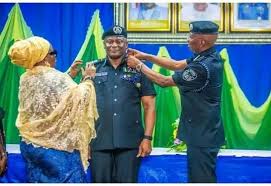
President Bola Ahmed Tinubu’s decision to block the reported mass retirement of about 30 Deputy Inspectors-General (DIGs) and Assistant Inspectors-General (AIGs) following the appointment of Tunji Disu as Acting Inspector-General of Police (IGP) has generated widespread debate among Nigerians.
While some citizens have applauded the move as a step toward stability within the Nigerian Police Force, others have warned that retaining officers who are senior in rank to the new police chief could undermine discipline and effective command.
Adedeji Emmanuel welcomed the development, describing it as appropriate under the circumstances. According to him, many of the affected DIGs are members of the 1992 Police Academy set and coursemates of the Acting IGP, arguing that “there is no point forcing them into retirement.”
However, Newman Nicholas expressed concern that the decision could pose operational challenges. He argued that allowing senior officers to remain in service under a junior officer may create friction and potentially lead to security breaches if they refuse to fully cooperate with the new leadership.
Similarly, Kingston Saha questioned the practicality of the arrangement, noting that issues of hierarchy and rank could become contentious. “Retirement would have been the best option,” he said, adding that the President may have erred in halting the process.
Uzoma Justice Chidiebere emphasized the importance of discipline and effective command within the Force. He warned that retaining officers who previously outranked the Acting IGP could complicate coordination. According to him, the situation might lead to divided loyalties and undermine clear lines of authority.
Offering a different perspective, Aloys Ikokwu dismissed arguments centered on coursemates, stating that seniority in the Police Force is determined by date of promotion rather than date of enlistment. He maintained that officers who had attained superior ranks before the Acting IGP remain his seniors in service, and suggested that those unwilling to serve under him should consider voluntary retirement.
Wealth Innovation also questioned the optics of the situation, asking whether senior officers would now be required to salute a junior who has become their superior by appointment.
In contrast, Nath Ugwu proposed a structural solution, suggesting that the retained senior officers could be deployed as part of a foundational framework for the establishment of state policing. His recommendation was endorsed by Wilson Myenguron and Comrade Evans Ayeni, who described the idea as “wise counsel,” adding that it could help prevent internal sabotage while advancing ongoing conversations about state police reforms.
Prince Uwagbale, meanwhile, described the development as a sudden shift in hierarchy, remarking that once senior officers may now have to accord full respect to a junior elevated to the top position.
The Presidency has yet to issue a detailed explanation for the decision, but the debate underscores broader concerns about hierarchy, discipline, and structural reforms within the Nigeria Police Force as the new leadership settles in.