Lagos, Nigeria’s commercial nerve centre, is emerging as the first major test ground for the Federal Government’s newly enforced ban on sachet and small-volume alcoholic drinks, as regulators move to choke off a trade blamed for rising alcohol abuse among youths.
From January 2026, the National Agency for Food and Drug Administration and Control (NAFDAC) began full enforcement of the prohibition on alcohol packaged in sachets and plastic bottles below 200 millilitres. In Lagos, where such products dominate roadside kiosks, motor parks, and informal markets, the impact has been swift and visible.
Checks across parts of Ajeromi-Ifelodun, Oshodi, Mushin, and Mile 2 show traders quietly withdrawing sachet alcohol from shelves, while distributors report halted deliveries amid fears of sanctions.
NAFDAC says the crackdown follows years of warnings and a prolonged moratorium, and is backed by the Senate and the Federal Ministry of Health. The agency argues that cheap, easily concealed alcohol has become a public health threat, particularly to minors, commercial drivers, and low-income communities.
“We are not reversing this decision,” NAFDAC Director-General, Prof. Mojisola Adeyeye, has maintained, insisting that enforcement is necessary to curb abuse, road accidents, and alcohol-related illnesses.
But in Lagos, home to a dense network of distilleries, bottling plants, and distributors, the policy is drawing fierce resistance.
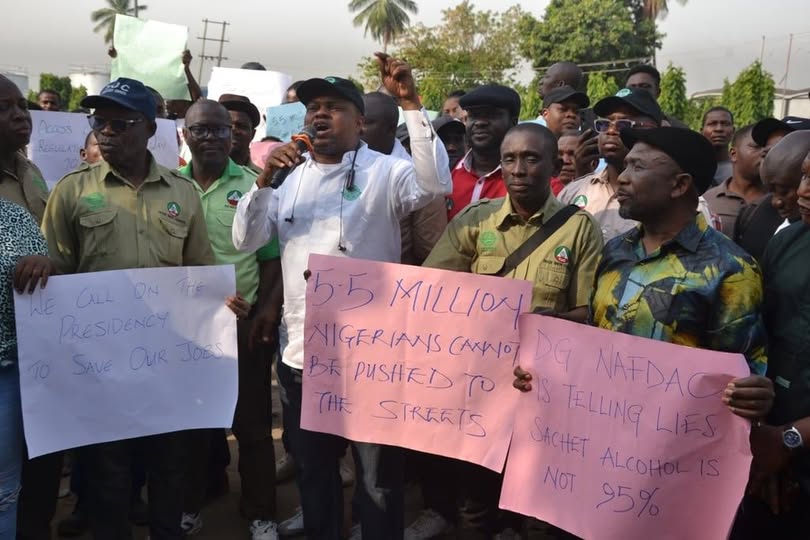
Industry groups and labour unions warn that the ban could disrupt thousands of small businesses and put millions of direct and indirect jobs at risk nationwide, with Lagos likely to absorb the heaviest losses. The Nigeria Labour Congress (NLC) has already staged protests, describing the move as excessive and economically damaging.
Some public policy analysts question whether enforcement alone can address alcohol abuse in a city where informal sales thrive. They argue that tighter age control, licensing, and distribution monitoring may be more effective than outright prohibition.
For now, NAFDAC is pressing ahead, with Lagos serving as a frontline for enforcement and a flashpoint in the growing debate over whether public health protection can be achieved without deepening economic hardship.