In Nigeria’s ever-evolving political landscape, it has become customary for citizens to applaud governments: local, state, and federal, for policy pronouncements, infrastructure projects, and ambitious reform agendas. Yet, beneath the surface of these celebrations lies a more fundamental question: have these governments truly met the most basic needs of the people—food, clothing, and shelter?
Before any applause is given, this question must be answered with honesty and clarity.
The essence of governance, at its most basic level, is the welfare of the people. Beyond grand projects and political rhetoric, citizens expect their governments to guarantee conditions that make life livable. Food must be affordable and accessible, clothing must not become a luxury, and shelter must be within the reach of the average worker. These are not aspirational goals; they are the minimum obligations of any responsible government.
Today, across Nigeria, the reality suggests a widening gap between these expectations and lived experiences.
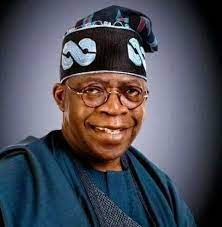
Food prices have risen dramatically in recent years, placing immense pressure on households. Staples that once formed the backbone of the average Nigerian diet are now priced beyond the reach of many families. While there have been interventions in the agricultural sector over the decades, such as Operation Feed the Nation introduced under former President Olusegun Obasanjo and more recent food-related policy efforts associated with President Bola Ahmed Tinubu, the impact has not been sufficient to shield citizens from the harsh realities of inflation and supply disruptions.
In markets across Lagos, Kano, Port Harcourt, and other major cities, the story is the same: fewer quantities of money are chasing fewer quantities of food. For the average Nigerian, feeding a household has become a daily struggle, with families forced to reduce portions, skip meals, or substitute quality for affordability.
Clothing, often overlooked in policy discussions, has also become a growing concern. The rising cost of textiles, both locally produced and imported, has pushed even basic clothing items beyond comfortable affordability for many. While clothing may not attract the same urgency as food, it remains an essential human need tied to dignity and social inclusion. A society where citizens struggle to clothe themselves adequately reflects deeper economic distress.
However, it is in the area of shelter that the crisis appears most acute and most neglected.
Across urban centres, particularly in Lagos, the cost of rent has surged to unprecedented levels. In areas once considered accessible to middle-income earners, such as Coker Aguda, Ajegunle, and Oyinbo on the Mainland, a modest two-bedroom apartment now commands rents exceeding ₦1 million per annum. Three-bedroom apartments go for upwards of ₦2.8 million, with similar properties in slightly more developed areas reaching ₦3.5 million yearly, and the critical question is how much an average citizen earns.
These figures stand in stark contrast to the income realities of most Nigerians. A significant portion of the workforce earns between ₦70,000 and ₦150,000 monthly, while many in the informal sector earn far less. Even among salaried workers, annual earnings often struggle to match, let alone exceed, the cost of rent.
The implication is clear: for many Nigerians, securing decent accommodation now requires committing the entirety or more of their annual income. This reality defies global standards, which recommend that housing costs should not exceed 30 percent of income. In Nigeria, that threshold has been far surpassed.
The consequences are visible in the rapid expansion of overcrowded housing, informal settlements, and substandard living conditions. Families are forced into difficult trade-offs between rent, food, healthcare, and education. In many cases, shelter becomes a source of anxiety rather than security.
This raises a critical point: can any government truly claim success when such fundamental needs remain unmet?
It is not enough to point to roads, bridges, or policy frameworks if citizens cannot afford to eat, dress, or live in dignity. Development must be measured not only by visible infrastructure but by the quality of life experienced by the average person.
At the local government level, there is a responsibility to ensure that communities are habitable, with access to basic services and affordable living conditions. State governments must go further by implementing policies that address housing deficits, regulating rent where necessary, and supporting economic activities that improve household incomes. At the federal level, the role is even more critical, as it sets national priorities, creates enabling economic conditions, and ensures that social welfare policies reach those who need them most.
The provision of food, clothing, and shelter is not a partisan issue. It is a universal benchmark of governance. Any administration, regardless of political affiliation, must be held to this standard.
This is not to dismiss the efforts that have been made. Governments at various levels have introduced programmes aimed at improving agricultural output, supporting small businesses, and addressing housing challenges. However, the scale of the problem demands more than incremental progress. It requires bold, coordinated, and sustained action.
Policies must move beyond intention to impact. Agricultural interventions must translate into lower food prices. Economic reforms must lead to higher real incomes. Housing policies must result in affordable homes, not just announcements.
Until these outcomes are visible and measurable in the daily lives of Nigerians, applause may be premature.
Citizens are not asking for extravagance; they are asking for the basics. The ability to feed their families without hardship, to clothe themselves with dignity, and to live under a secure roof should not be too much to expect.
Before any government is celebrated, these fundamental questions must be answered: Can the people eat? Can they clothe themselves? Can they afford a place to live?
If the answer remains uncertain, then the work of governance is far from complete.